

By Lili Galvin for The Griffith Journal
Globally, society marks reaching the age of puberty as a monumental milestone for young girls, symbolising the shift into adolescence and the near-future adulthood as something special. Why then, is it never mentioned that the hormonal changes occurring within their body may be coupled with life-altering symptoms that affect everyday functioning due to a lifelong chronic disease?
That lifelong chronic condition is endometriosis, and according to data from the World Health Organisation, endometriosis affects an estimated 190 million, or 10% of women who are of reproductive age globally.
Endometriosis and Its Global Prevalence
Endometriosis is a complex, incurable condition where endometrial tissue grows outside the uterus. This tissue continues to thicken and bleed like the uterine lining during menstruation, leading to inflammation and the formation of scar tissue throughout the abdomen and, in severe cases, other organs.
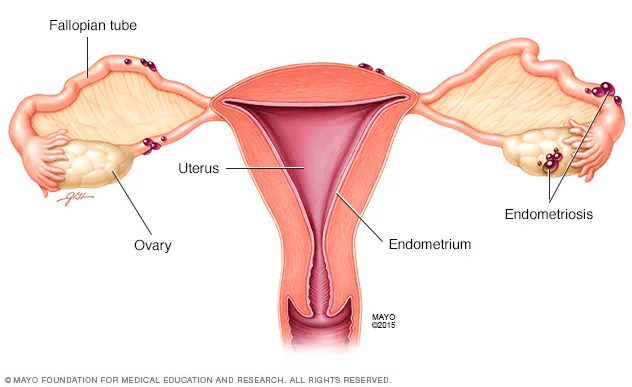
Causing more symptoms than the portrayed chronic pain and irregular periods, it also affects hormones, leading to mood swings, prolonged fatigue, pain associated with sex and fertility complications. All factors that impede a woman’s quality of life when dealt with, and the overlooked reality that, even without a diagnosis, this is still someone’s lived experience.
A study conducted by Front Global Women’s Health in 2025 assessed the global burden of endometriosis from 1990 to 2021, noting distinct variations in the documentation of incidence rates across different countries and populations. This suggests that the true prevalence of the condition may be underestimated globally, as low and middle-income countries lack the diagnostic capabilities and resources to assess endometriosis compared with high-income countries.
Endometriosis in Australia
Australia is considered a leading country in raising awareness of endometriosis and is categorised by the World Bank as a high-income country. Being the first country in 2018 to launch a National Action Plan for Endometriosis (NAPE). However, both academic studies and personal advocacy show Australian women are not receiving enough support from the healthcare system or the government, six years into the NAPE implementation.
Chiemeka Chinaka, a researcher with the University of Queensland’s School of Economics, analysed the rate of adoption of laparoscopies, a diagnostic tool and the use of a pain medication called nafarelin from January 2012 to December 2023. Intending to map whether the implementation of the NAPE led to visual changes in numerical trends, however, few to no changes were observed. Mr Chinaka highlighted that long wait times in public healthcare and high costs in private practices are among the barriers women face in the absence of targeted government strategies.
Mr Chinaka said, “the waiting time for something like a laparoscopic resection is so long it means a huge number of endometriosis patients have to go through the private system, which creates another barrier for them”. Continuing, saying, “it is easy to say when reviewing government policy that we need more, but people with endometriosis do need targeted strategies, specialised clinics and specialists who are well-funded to reduce the burden of out-of-pocket costs.”
There are currently 33 endometriosis and pelvic pain clinics that are funded by the Australian federal government, with at least one in each Primary Health Network region. The clinics provide targeted care and support for those with endometriosis and chronic pelvic pain through a holistically managed approach.
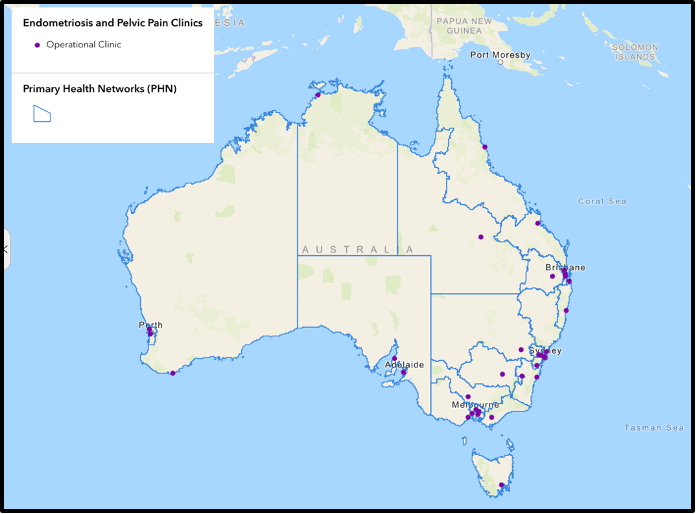
In an Endometriosis Australia interview, Julia Snook talks with General Practitioner Dr Alecia Macrow, a doctor at one of the clinics, who highlighted the recurrence of medical distress Australian women experience.
“It continues to surprise me the level of distress that we see- medical burnout, medical trauma… One lady in particular came and said to me I’m physically, emotionally, financially exhausted, and we were, sort of, the last bet for her before kind of giving up entirely. And we see that a lot.”
But long wait lists and increasing pressure and demand on these clinics, alongside the financial barriers of specialised gynaecological practices, means Australian women are faced with prolonged diagnostic timeframes and uncertainty. This doesn’t even account for the medical discrimination that two-thirds of Australian women face, which leaves them feeling dismissed, disbelieved and stereotyped.
Even with the NAPE, awareness campaigns, and advocacy efforts, Australian women with endometriosis still lack sufficient support. Their quality of life is significantly impacted by the disease and associated stigma. Unfortunately, this situation is often seen as fortunate compared to the barriers and challenges faced by women in countries like Sri Lanka and India.
Endometriosis in Sri Lanka and India
The World Bank classifies both Sri Lanka and India as lower-middle-income countries, with an estimated combined population of 1.5 billion. Most recent data, from a Lancet Regional Health of Southeast Asia study, predicts that currently there are approximately 350,000 women in Sri Lanka and 50 million women in India living with endometriosis. Whether they are aware of it or not.
This study calls for “collaborative research among Asian countries” to “generate tailored regional solutions”. It proposes that, with cross-country research “coupled with a strong political will and adequate funding, the initiative can potentially improve diagnosis, treatment, and quality of life for affected women”.
However, academics and international organisations believe the first, more crucial step lies with improving their countries’ sexual education. An article in the Sage Journals Journal of Psychosexual Health says in India “sex education is an abandoned subject”, and despite efforts to mainstream it into curricula “it continues to be a taboo and an unresolved interpsychic conflict among different strata of Indian society”.
The United Nations agency for sexual and reproductive health, the United Nations Population Fund, hosted its fifth Generation-to-Generation dialogue in 2018, during which it highlighted the need for comprehensive sexuality education in Sri Lanka. It identified sexual education as being “associated with social stigma”, and that “sex is considered a topic for adults, and the importance of comprehensive sexuality education for young people is often overlooked”.
However, this was met with both political and public debate, delaying the rollout of a national curriculum that includes sexual education.
So, what does it mean if sexual education isn’t taught openly?
How will young girls and women know when the pain and symptoms they feel aren’t normal? Further, how can a healthcare system include comprehensive gynaecological treatment that supports women with diseases like endometriosis when discussions about sex, puberty and reproductive health aren’t even normalised?
Speaking with Kithmini Alahakoon, a final-year medical student at General Sir John Kotelawala Defence University in Colombo, Sri Lanka, made it clear what true barriers women face in seeking reproductive health care, let alone endometriosis care.
Ms Alahakoon shared that “in Sri Lanka, women generally have good access to free public healthcare services, especially through the well-established maternal and child health system led by the Ministry of Health Sri Lanka and the Family Health Bureau” but “there are many geographical, financial, cultural and social barriers, as well as health system constraints”.
Saying, “conditions like endometriosis are increasingly recognised, but in practice, they are often underdiagnosed and sometimes underestimated,” as symptoms are normalised and awareness among both patients and healthcare providers is limited.
Ms Alahakoon reflected that “Sri Lanka offers strong, equitable maternal healthcare through a robust public system, but gaps remain in addressing chronic and non-pregnancy-related women’s health issues, influenced by resource limitations, cultural factors, and diagnostic challenges”.
Societal Systemic Change
Women not only in Sri Lanka and India, but also in other lower-middle-income countries, are faced with more barriers, culturally, socially and diagnostically, as they are not equipped with the resources countries like Australia have. Meaning globally, the true prevalence of endometriosis and the burden it imposes on women is not recognised.
However, unfortunately, no matter the country’s economic status, women continue to be dismissed, and conditions such as endometriosis that require early intervention and long-term care are going unrecognised. Debilitating a woman’s life.
Women with endometriosis are at a 42% increased risk of self-harm, overdose, and suicide compared to those without. This must be changed; women are entitled to the basic human right to receive adequate education and care tailored for them, and only them.
If you find this story distressing and need someone to talk to, help is available. Call:
- Lifeline on 13 11 14
- Kids Helpline on 1800 551 800
- Beyond Blue on 1300 22 46 36
- Headspace on 1800 650 890

 The Griffith Journal
Leave a comment