
On 21 September, the Australian government formally recognised the State of Palestine.
But for the tens of thousands who marched through Brisbane last month, that move was only a first step – not the finish line.
Brisbane’s Largest Palestine Protest Yet
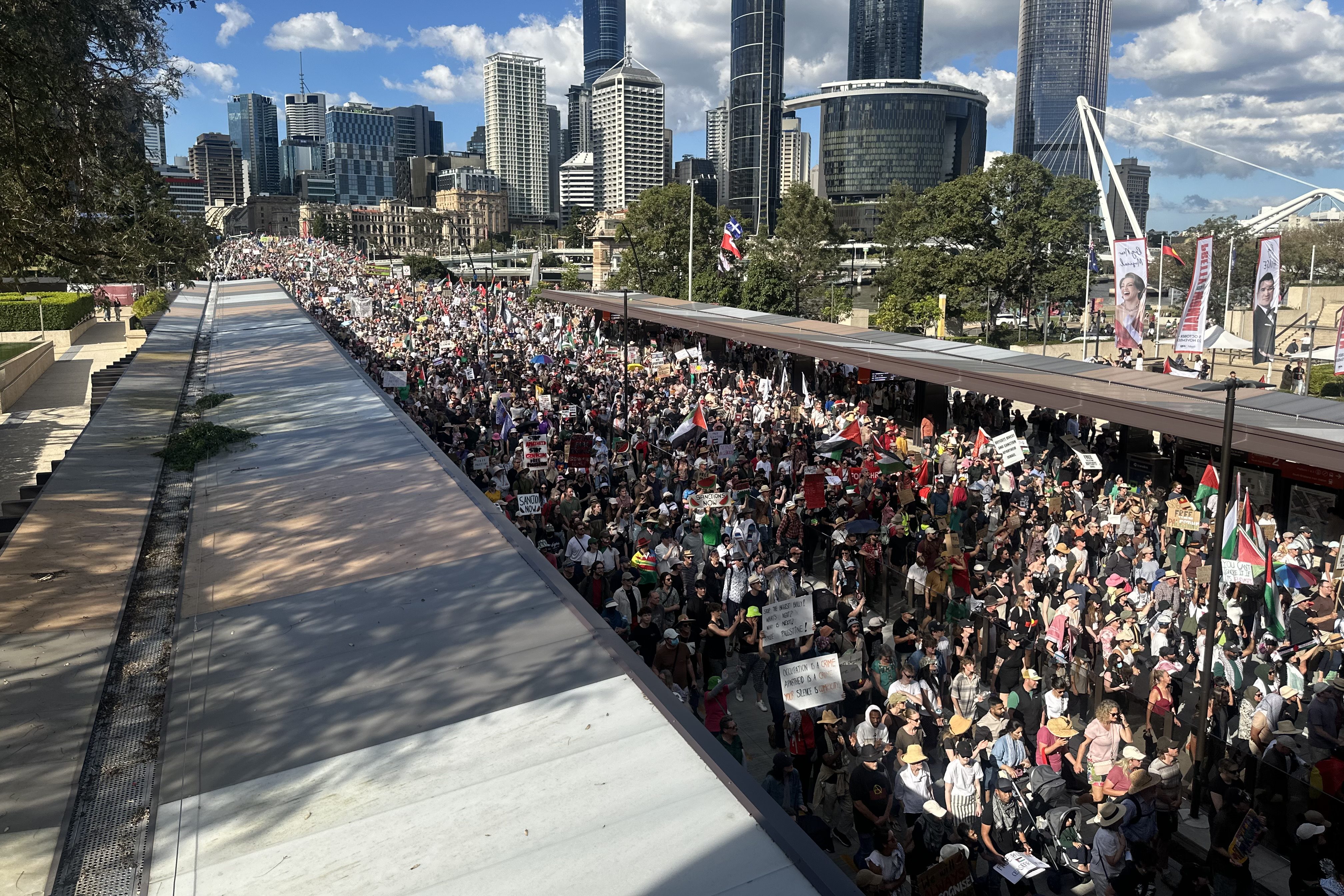
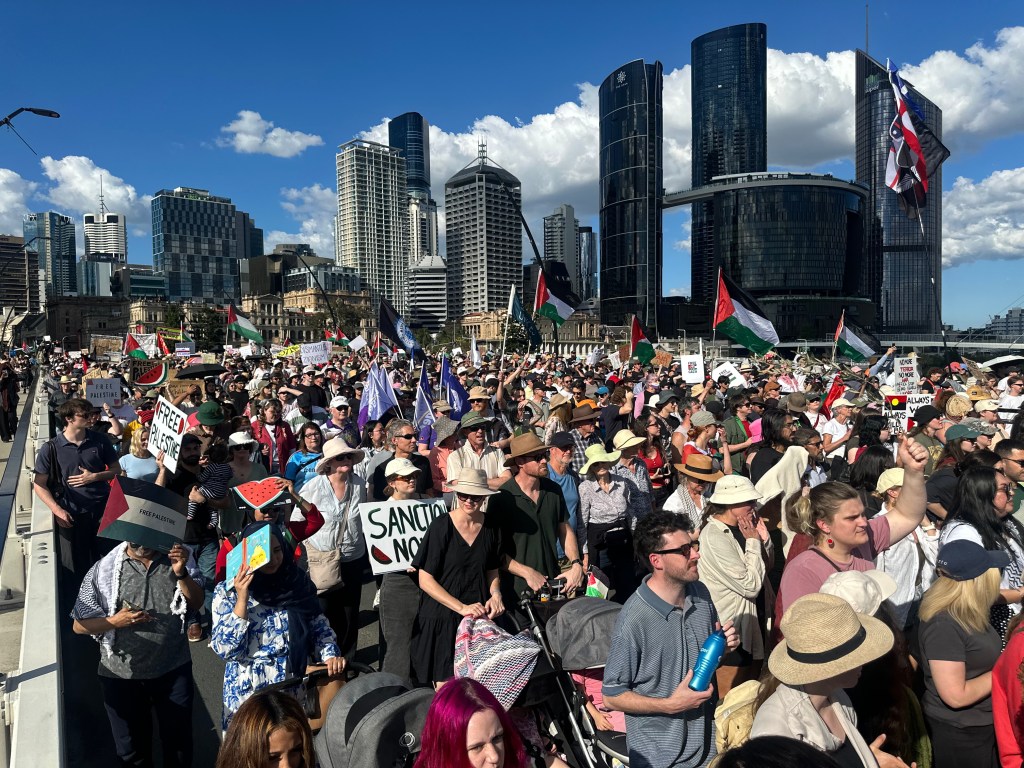
On 24th August, Brisbane’s CBD was taken over by chants of “End the siege” and “Sanction Israel now.”
Organizers estimated 50,000 participants in the city, as part of a nationwide day of action.
They said over 350,000 people attended across 40 rallies.
Queensland police reported a much lower figure at 10,000.
Similar discrepancies occurred in Sydney and Melbourne’s counts.
The march was reportedly the largest Palestine solidarity protest Brisbane has seen since demonstrations began in October 2023.
What Australia’s Recognition Means
A month later, Australia joined a growing bloc of Western nations, including the UK and Canada in formally recognising Palestine.
Prime Minister Anthony Albanese described the move as recognition of the Palestinian people’s “legitimate and long-held aspirations” for a state.
He added that further steps will depend on future commitments from the Palestinian Authority, including reforms in governance, demilitarisation of a future Palestinian state, and ensuring Hamas plays no role in government.
Critics note that recognition is largely symbolic as it does not grant Palestine UN membership or immediate sovereignty.
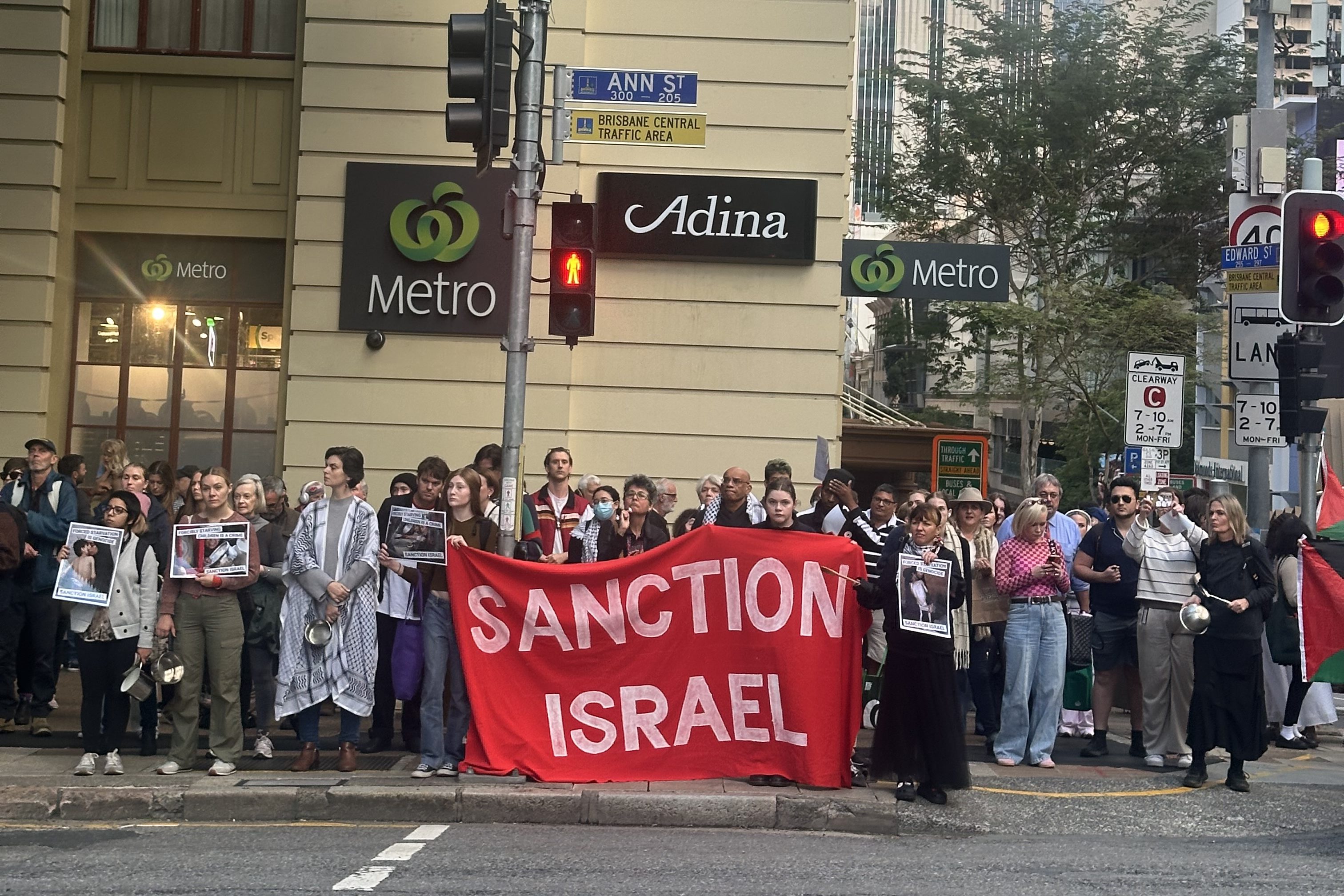
“Recognition of Palestine is meaningless if Australia remains complicit,” said Remah Naji, organiser for Justice for Palestine Magan-djin.
“Our demands have not changed: stop supplying weapons, impose sanctions, and end support for the killing machine.”
The Situation in Gaza

As of September, the Gaza Health Ministry has reported over 65,000 Palestinian deaths since the war began.
Earlier this month, the UN Commission of Inquiry issued its strongest condemnation to date, concluding that Israel has committed genocide in Gaza.
Investigators said the evidence meets legal thresholds including intent, patterns of targeting civilian populations, and destruction that cannot be justified under laws of war.
At the same time, UN and humanitarian agencies have confirmed a man-made famine in Gaza, caused by aid blockades and destruction of essential infrastructure.
Millions remain at risk of starvation and disease.
Israel rejects these findings as “distorted and false,” arguing that its military operations target militants, not civilians, and that some aid restrictions are necessary for security.
Voices from the Protests
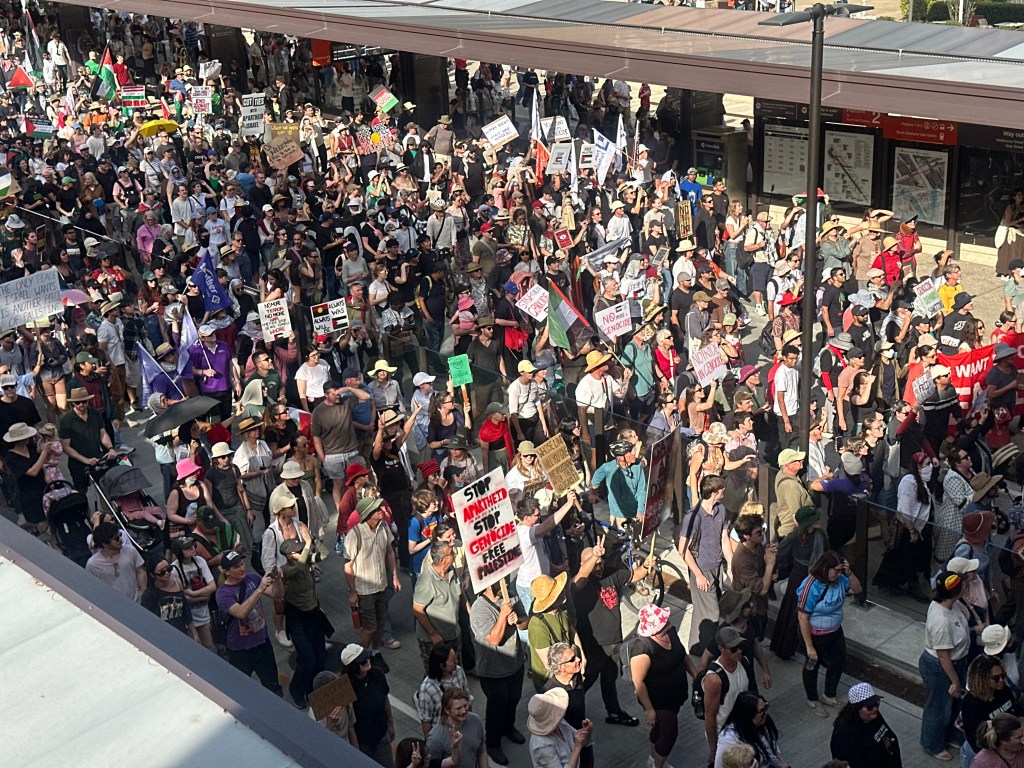
The rallies drew a broad mix of attendees – students, workers, families, unionists, artists, and faith groups.
For many, recognition did little to soften the urgency of their demands.
Visual artist Kat McLeod framed it as a moral concern:
“Anything that pertains to the mass slaughter of children is everyone’s business – all children are ours, and it is our duty to protect them. Australia manufactures the hinges that open the F-35s dropping bombs on Gaza. We are intimately involved.”
For Shelly, a hospitality worker, attending every rally since the war began is about accountability:
“I feel ashamed and despairing at how full of lies our government is. I hope enough people speak up until they have no choice but to sanction Israel.”
Declan, a university student, said constant livestreams from Gaza made the crisis impossible to ignore:
“People going to aid station and getting shot. You can’t sit back and act like this isn’t happening. It’s being livestreamed. People have had enough.”
A 20-year-old UQ student, originally from Israel and Jewish, said her identity compels her to speak out:
“People matter. Palestinian people are people. As a Jewish person, don’t weaponize antisemitism to excuse genocide.”
Zac, a Palestinian-Australian student, described it as deeply personal:
“I’ve known this conflict my whole life…the devastation is the worst it’s ever been. I never got to vote on my government sending military aid to destroy…to literally put my family in a police state.”
Photographer and activist Alex Bainbridge said the rallies highlighted Australia’s responsibility:
“The government is not just doing nothing – it is actively complicit. That makes it a moral imperative to stand up. This isn’t a faraway issue.”
What’s Next?

Protests are planned nationwide for the 12th of October, marking two years since Israel launched its campaign on Gaza.
Organisers say they will continue mobilising until Australia moves beyond recognition and takes concrete action.


 The Griffith Journal
Leave a comment