
The James Webb Space Telescope (JWST) has once again delivered observations that challenge the boundaries of contemporary cosmology.
A recent study using data from the JWST Advanced Deep Extragalactic Survey (JADES) revealed a strange imbalance: out of 263 distant galaxies examined, about two-thirds rotated clockwise—while only a third rotated counterclockwise.
This may seem like an obscure detail, but in a universe that is supposed to be statistically uniform in all directions, such an imbalance could point to something much bigger—perhaps even a completely new view of the cosmos.
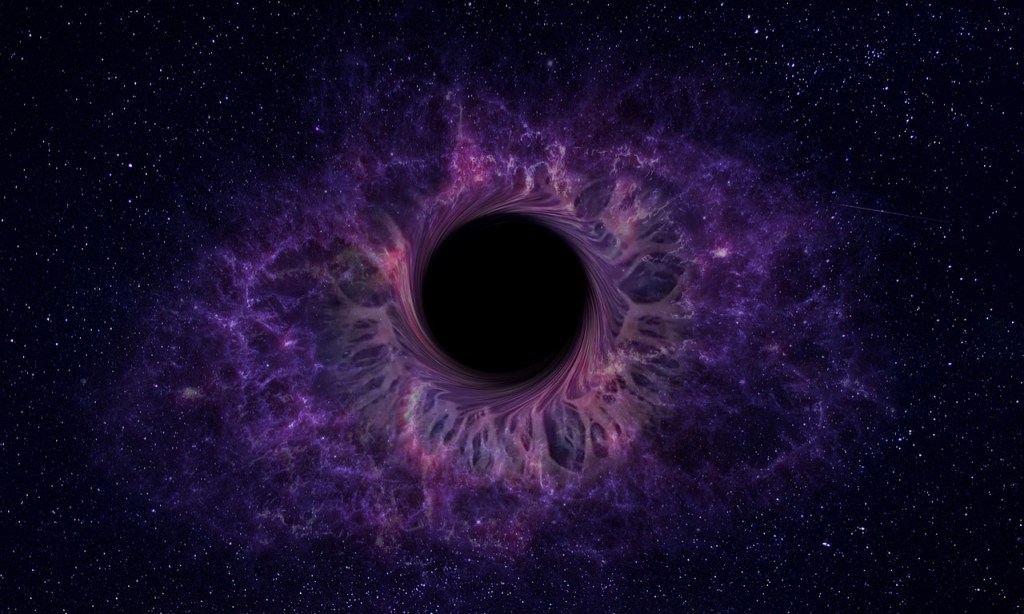
One radical idea gaining fresh attention is black hole cosmology: the hypothesis that our universe may be the interior of a black hole formed in a higher-dimensional parent universe.
A Challenge to the Cosmological Principle
Modern cosmology is built on the cosmological principle—the assumption that, on a large scale, the universe is homogeneous and isotropic (the same everywhere, in every direction).
If that’s true, then the directions galaxies spin in should be evenly distributed when enough are sampled. But the recent JWST findings go against this: they suggest a possible anisotropy—a preferred direction that current models don’t explain.
While statistical error or data bias is possible, the precision of JWST’s instruments and the scale of the imbalance suggest a deeper physical cause.
Black Hole Cosmology: An Overview
The idea that our universe might be inside a black hole was first seriously proposed by theoretical physicists such as Nikodem Popławski.
According to his and others’ interpretations of Einstein-Cartan theory (a modified version of general relativity that incorporates torsion), the collapse of a massive, rotating star in a parent universe could lead not only to a black hole but to the formation of a new, expanding universe inside it.
In this view, the singularity at the centre of a black hole—the point where current physics breaks down—is replaced by a bounce or a bridge, through which matter and energy continue into a new, inflating spacetime. That inflating spacetime could be what we experience as the expanding universe.
This hypothesis provides a natural explanation for many cosmological phenomena, such as the observed homogeneity of the cosmic microwave background and the apparent flatness of space. It also circumvents the problem of an initial singularity in the Big Bang model by positing a continuous evolution from a collapsing star into a new universe.
Rotation as Evidence?
If our universe was formed within a rotating black hole (known as a Kerr black hole), then the spacetime it contains would inherit angular momentum. This could subtly influence the distribution of angular momentum within the universe itself. In other words, the large-scale spin preference of galaxies might be a reflection of the parent black hole’s rotation.
The recent JWST observations could thus serve as indirect evidence of such a scenario.
While previous studies using data from telescopes like Hubble and the Sloan Digital Sky Survey have hinted at minor rotational asymmetries in galactic spin, JWST’s ability to observe farther and with greater clarity adds a new layer of credibility to the phenomenon.
If this preference is confirmed across even larger and more distant samples, it would strengthen the case for a universe with a built-in directional bias—potentially caused by the angular momentum of a black hole beyond our observable reality.
If future observations continue to show this directional bias, it could support the idea that the universe inherited its spin from a parent black hole—perhaps one in a universe beyond our own.
Implications for Cosmology and Physics
If the black hole universe hypothesis proves viable, it would prompt a fundamental shift in how we conceptualize the universe. Key implications include:
- Reframing the Big Bang: The beginning of our universe may not have been an absolute beginning, but a transformation from a prior collapsing state in a parent universe.
- Multiverse Possibility: Every black hole in our universe might give rise to its own universe, leading to a branching structure of universes within universes.
- Time and Causality: The flow of time and the arrow of entropy could vary depending on one’s position relative to the black hole’s event horizon, offering new perspectives on temporal mechanics.
- Quantum Gravity: If true, the model could guide efforts to reconcile general relativity with quantum mechanics, especially regarding the nature of spacetime under extreme conditions.
- Solving the information paradox: If new universes are born within black holes, then information isn’t lost—it’s carried forward.
Scepticism and Next Steps
Despite its allure, the black hole universe hypothesis remains speculative and controversial. It is not widely accepted within the cosmological community, largely due to the difficulty of testing it empirically. Critics argue that the observed asymmetry could be due to unknown selection effects or biases in image processing and data interpretation.
Nevertheless, the implications of JWST’s findings cannot be ignored. Further observations of galactic spin from different regions of the sky, across different redshifts (distances in time), will be critical to confirming whether this pattern persists. If so, cosmologists may need to seriously reconsider the architecture of the universe—and its place in something even larger.
Conclusion
The James Webb Space Telescope was designed to look deeper into the universe than any previous instrument. It’s doing more than that—it’s challenging our most basic assumptions about what the universe is. A consistent spin asymmetry among galaxies is not just a quirky observation; it might be the first real, observable trace of something beyond the Big Bang, beyond the cosmic horizon, and possibly beyond the universe itself. If we are indeed living inside a black hole, the implications are staggering. Our understanding of space, time, origin, and destiny would need a complete overhaul. While we may be far from confirming such a theory, one thing is certain: with each observation, the universe becomes a little less familiar—and infinitely more fascinating.



 The Griffith Journal
Leave a comment