
Campus Accessibility and the Construction of N82
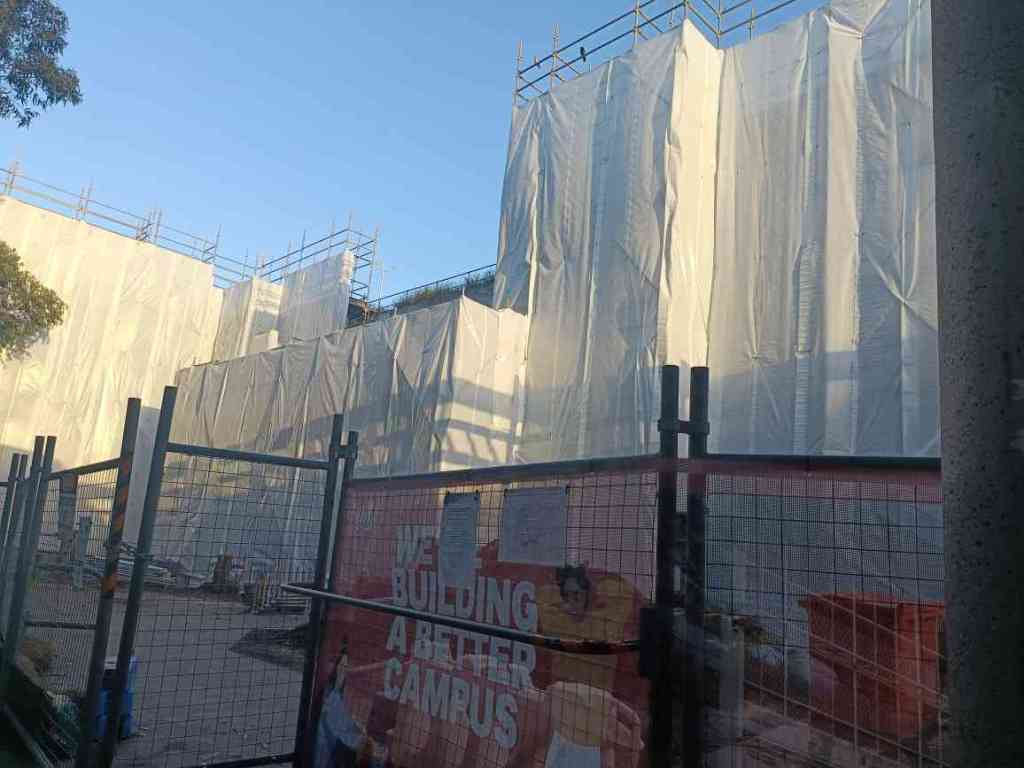
Construction work at the Nathan Campus has made it difficult for people to navigate the campus, especially those who live with a disability.
Most students would describe the Nathan campus as inaccessible for a variety of reasons. These reasons include, too many stairs, and a lack of affective directional signage. A Griffith Journal Article published in February highlighted the lack of tactile paving around the N82 construction site.
It is recorded that 10% of students enrolled at Nathan Campus have identified that they have a disability. There are 150 students in total that have identified that they have difficulty seeing, with 13 of those students being completely blind.
Brendon Donohue is a totally blind undergraduate student attending Nathan Campus and opened up about his experiences navigating the campus. Brendon decided to study online this trimester after learning that he was not able to move around the campus independently.
“I read an email about the construction work being done on campus and realised that I could not get around campus on my own” – Brendon Donohue.
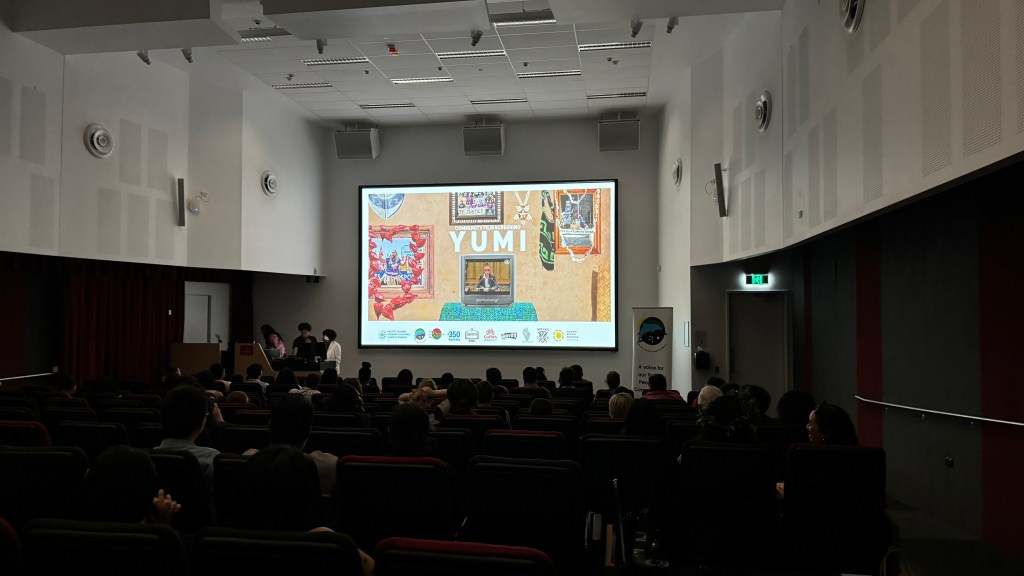
Brendon also described navigating the campus was a “nightmare” both because limited tactile paving and other obstacles like e-scooters and bags are being left in walkways. He also told me that he finds a lot of barriers to attending social events like movie nights on campus.
Manager of the Student Disability and Accessibility department, Cathy Easte shared similar sentiment about how exclusion affects a person.
“Repeat instances of exclusion can make a person who is disabled feel overwhelmed and alone. For example, I have a hearing impairment and when I miss important information because I wasn’t told in an accessible way it is very stressful” Cathy Easte.
Ms Easte thinks that the university could be doing more to make the campus more accessible for everybody.
“The university could be putting up more directional signage” and “when you create an environment that excludes people with a disability you are doing a disservice to everyone” she said.
Ms Easte also agreed that more could have been done to communicate the impact of the construction site on foot traffic.
So, what about the tactile paving?
Currently the lack of tactile paving outside of N25 does limit some of independence of vision impaired people. However, due to the university’s limited budget, little can be done to solve the issue.
Project Managers, Liz Stuart and Kiera Leggereit said in an interview that they followed University accessibility recommendations and were not required to place additional tactile paving along the accessible route to campus. However, they are always open to recommendations to make the alternate path more accessible where the university budget allows them.
Have concerns about the pathway around the N82 construction site? Email your concerns to majorprojects@griffith.edu.au.
Johnson Path will reopen early 2025 after the demolition of N13. This may mean it is cheaper to wait for the path to reopen rather than putting down additional tactile paving.
Other Solutions?
Many Australian Universities use MazeMap software for their online maps. Mazemaps is able to provide directions to specific rooms and can give auditory directions which can help vision impaired people move around the campus independently. Bond University, University of Queensland and the University of NSW are just a few of the Australian Universities who use Mazemaps.
Digital Wayfinding & Timetable Integration for Universities (mazemap.com)



 The Griffith Journal
Leave a comment